Posts

katrina midgley

Behind the scenes at Blenheim Palace International Horse Trials with Katrina Midgley

Whether you’re a horse enthusiast or not, you’ll recognise Stable Events as the masterminds behind  Blenheim Palace International Horse Trials and other prestigious events like The Game Fair. On this episode, we catch up with the lady behind the eventing side of Blenheim- Katrina Midgley.

On this episode of the podcast, Katrina shares her fascinating journey from Pony Club beginnings to becoming a pivotal figure in event management. She talks about how her early experiences at events like Badminton and Burghley, combined with her work with TRMG producing show guides for major events like Royal Windsor Horse Show and Olympia, paved the way for her current role. Through TRMG, she got involved with The Game Fair, and her passion for event management has only grown since.

What’s it like to be in event management?

Katrina gives us an insider’s look at what it takes to organise large-scale events. From managing operations, marquees, infrastructure, and water, to overseeing various aspects of Blenheim Palace International Horse Trials and The Game Fair, her role is both challenging and rewarding. The key to success? A strong, capable team and the ability to think on your feet.

And now for Blenheim Palace International Horse Trials…

We delve into the special allure of Blenheim Palace International Horse Trials. Blenheim offers a closer, more intimate experience with riders and horses compared to other events. The beautiful venue, with its iconic bridge over the lake and stunning palace backdrop creates an unforgettable atmosphere. Visitors can enjoy a day filled with equestrian sports, shopping, and scenic views as well as additional attractions to keep all the family amused. This year, the team is also introducing new features, to mark Stable Events’ first year organising the event…

Interactive Talks and Demonstrations: In this new talk area, visitors can learn from the best and get involved in discussions about topical issues in the horse world.
Evening with Geoff Billington: Showjumper Geoff Billington will be entertaining equestrian enthusiasts in an evening event after the main show has closed.
Innovative Course Design: The 100 now incorporates a water complex, situated in the heart of the retail area, thanks to the collaborative efforts of course designer David Evans. This adds an exciting new element for riders and spectators.

With so many events- why visit Blenheim in September?

Whether you’re a die-hard horse trials fan or just looking for a fun day out, Blenheim offers something for everyone. From getting up close to your equestrian heroes to enjoying a picturesque picnic by the lake, the event promises a memorable experience.

Thank you for listening to the Small and Supercharged podcast. If you enjoyed this episode, please subscribe, leave a review, and share it with your friends. Stay tuned for more exciting episodes!

Thinking of rebranding? Listen to this first!

Over the past few weeks, I’ve been discussing one of the most interesting (and, let’s be honest, slightly random) rebrands I’ve encountered—Twitter’s transformation into X. Elon Musk, the man behind this rebrand, is an impressive entrepreneur with an amazing record, but I was keen to get under the skin of this one and thought what better way than on the podcast… let’s go…

Twitter’s Rebrand to X

There are a few points to this podcast- the key talking points you’ll hear are around…

A rebranding overview: Twitter’s change to X breaks conventional rebranding rules, making it a particularly interesting case study. We’ll explore the strategy behind this move and what it means for the platform’s future.

The vision: It would seem that Elon is looking to evolve and develop Twitter into something much more expansive than just a social media platform. We’ll discuss his potential ambitions and what this could mean for users.

Why rebrand?: Companies rebrand for various reasons, including evolution, development, and sometimes to distance from past negative reputations. We’ll explore these motivations in depth.

What do you need to think about before you rebrand?: Before jumping into a rebrand, it’s crucial to understand why you’re doing it and ensure it’s not just out of boredom. A successful rebrand requires clear objectives and a solid plan to communicate these changes to your audience.

What makes a successful or unsuccessful rebrand?: We’ll look at examples of both successful and less successful rebrands. Factors that contribute to success include maintaining some consistent elements from the old brand to help with recognition and continuity.

What are consistent elements of a brand and why do these matter in a rebrand?: Brands like Apple have managed to evolve while keeping core elements intact, ensuring brand recognition remains high.

Tips for a Successful Rebrand

1. Why are you doing it?: Clearly define the reason for your rebrand. Whether it’s to modernise, shift direction, or target a new audience, knowing why you’re doing it will guide the entire process.
2. Consistency is key: Keep some elements of the old brand to ensure recognition. This can be the colour palette, fonts, or logo elements.
3. Communication really does matter: Ensure your audience understands the reasons behind the rebrand and how it benefits them. Buy-in from your customers and stakeholders is crucial in the success of a rebrand.

Rebrands are complex but necessary for growth and adaptation in a changing market. By understanding the reasons behind them and maintaining some consistency, businesses can navigate rebrands successfully. It’s going to be really interesting to see how Twitter/X’s rebrand goes, and the potential impact it will have on the brand.

Thank you for tuning in to this episode of the Small and Supercharged Podcast. If you have any questions or want to discuss this further, join our community or Mastermind Group!

Small & Supercharged Book

Music, modelling, TV work and a new equestrian brand with Nermina Pieters-Mekic

In our latest podcast episode, I had the pleasure of sitting down with the multifaceted Nermina Pieters-Mekic, founder of the groundbreaking new brand, Equidae London. As we chatted about her diverse background, from singer and songwriter to TV star and model, Nermina shared the exciting journey that led to the creation of her equestrian fashion brand.

A Journey Through Chapters

Nermina’s life has unfolded in various chapters, each marked by different passions. From growing up in the Netherlands and studying law to pursuing modelling and music, she eventually found herself in the UK, where she became a cast member of the Real Housewives of Cheshire. However, her deep love for music and horses remained constant throughout these diverse experiences.

Inspiration for Equidae London

One of the significant inspirations behind Nermina’s venture is none other than Princess Anne. Nermina found herself drawn to a particular image of Princess Anne riding in a red jacket. This image sparked the idea for a signature piece in her collection, which is a jacket with embroidery on the back, combining a high end look with technical features.

Lockdown project

Equidae London grew as a concept during lockdown. Nermina wanted to bring something fresh and different to the equestrian market, something that blended fashion with function and comfort. She realised that she spent the vast majority of her life in equestrian clothing, so set about designing pieces that embraced current trends that were also sustainable and had ethical production at its heart.

Performance and Sustainability

A crucial aspect of Equidae London is its commitment to performance wear. Nermina collaborated with a factory in Portugal that is renowned for its performance fabrics. These fabrics undergo testing for rubbing, sweating, and have antibacterial properties. Not only did Nermina do the research, she also visited Portugal and handpicked the fabrics to tick all the boxes for each design. The Equidae base layer is a great example as it is made with a brushed fabric for warmth and sweat absorption-  every piece  in the collection is designed with the rider’s comfort and functionality in mind.

Building the Equidae London brand

The brand didn’t come to life overnight, and to ensure she was on the right track, Nermina did a lot of research, seeking advice from friends in the fashion industry and building a team of experts. The process involved trial and error, with Nermina actively testing prototypes, riding in them, and even washing them in various conditions to ensure durability.

Equidae London is not just about fashion; it’s a conscious choice. Nermina envisions her brand’s pieces not just looking good, but aligning with the sustainable and ethical values of her customers. She’s very aware that, with Equidae London, she has the ability to make a positive impact.

Challenges Along the Way

Embarking on the journey of building a brand is never without its challenges. Nermina shares the surprises and obstacles faced during the two and a half years of establishing the brand. From working closely with designers to navigating factory changes, each step in the process presented unique challenges. However, Nermina emphasises that the feedback from users makes it all worthwhile. The highs come from witnessing individuals appreciating the quality, colours, and intricate details of Equidae’s products.

What’s to come from Equidae London?

Moving into 2024 and beyond, Equidae London will be focusing on expanding the collection, collaborating with diverse athletes, and creating a team to propel the brand forward. Nermina wants to grow a brand that resonates with riders and non-riders alike

To find out more about Nermina and Equidae London, find them on Instagram, or through the Equidae London website.


Unveiling the Power of Values- What are your values and why do they matter?

Ever wondered why values matter? Do you know what your values are? In this blog (and the podcast that was the inspiration behind it), we talk all about values. Let’s dive in.


The inspiration for this blog and podcast came from when I was doing my ILM Level 7 in coaching and mentoring. We did a lot of training around values and the importance of these, not just to us personally, but also from a coaching and mentoring point of view. Although I was fairly confident in identifying my clients’ values in a holistic way, through experimenting with values questionnaires, the results that were revealed really supported these assumptions, and what that meant in different situations.

However, it’s not just about recognising values, but articulating these too. A lot of values are ‘hard wired’ and seeds sown from a young age. Values are, usually, inherently deep within, but bringing them to the surface can provide clarity.

Value questionnaires

How can you do this? If you work with a coach or a mentor you can explore these, but you can also use value questionnaires and exercises to establish, understand, and prioritise values.  There’s a lot of value in working through such exercises for personal development. It can really help people to understand how they operate and why they make the choices they do. One way to do this is life values questionnaires, where individuals rate the importance of various values in their lives. This exercise helps in understanding personal priorities and making informed decisions.

Another level of values is beliefs, and often these are connected. Things like upbringing, family, and experiences shape can one’s belief system- and often we don’t know where these beliefs and the values that map to them started, but if we can uncover these beliefs and challenge as appropriate, it can have a big impact on our future career and even life.

Knowing and understanding one’s values can impact decision-making in various aspects of life, including career choices, relationships, and daily routines.

Neuroplasticity

But before you say that you’ve ‘always been like this’ and ‘can’t change’- I’ll stop you there. You can. The concept of neuroplasticity is an utter game changer for personal growth, allowing people to change and adapt over time. If you’re interested in this, I would definitely have a good look around at books on neuroplasticity- there are plenty out there.

And now it’s over to you. If you want to see how your values impact your world, reflect on your own values and consider how they might shape your decisions and actions.

Note: This recap provides a condensed summary of the podcast episode. For a more in-depth understanding, listening to the full episode is recommended.

Small & Supercharged Book

Starting Mount St John, rethinking breeding and more with Emma Blundell

Mount St John Emma Blundell

I’ve followed Mount St John’s story forever, and it’s a real joy to be joined by founder Emma Blundell, the founder of Mount St John on the podcast.

Emma wasn’t from a horse family but, from a very young age, was crazy about all animals. At seven, she started riding which then progressed into competing in showing classes, and as they say the rest is history!

The art of breeding

Emma is a complete wealth on knowledge on everything to do with horse breeding and we talk about linear scoring in stallions and how she uses this as an analysis tool to support her breeding decisions and pairings between mares and stallions. That said, her depth of knowledge also plays a huge part in the choices she makes. It’s also possible to do linear scoring on mares, and although Emma has done this on some, she’s now been involved in breeding for so long that it’s almost hardwired. She talks about how she assesses strengths and weaknesses and what needs to be improved from the mare side, and then looks at the stallion’s traits to see if they complement the mare, and also the heritability factor. This is the chance of the stallion or mare passing on a trait to its offspring.

Where the idea for Mount St John began

Emma’s knowledge in this specific area started at university where she studied it and then, through her dissertation, saw the possibility to make this into a business. Emma had a mare she was trying to do embryo transfer with and then started to look at the possibility to really niche in on that, because there was no one in the market doing this. Breeding was traditionally connected to older people and also stallions rather than mares.

One of the interesting points that Emma zeroed in on what that with an embryo transfer system in place, the mares at Mount St John could continue their competitive careers without taking a year off for traditional breeding.

Making Mount St John commercial

Emma discussed the commercial aspect of her approach, highlighting the importance of efficiency in the breeding process. By starting the embryo transfer once the mares reach a productive age, she optimises the breeding cycle and maintains a steady flow of potential superstars. This not only streamlines the process but also contributes to the commercial success of Mount St John.

Navigating the Lows

Every business has its share of challenges, and Emma was open about the lows she has faced. From financial setbacks to the heart-wrenching loss of horses, she acknowledged the difficulties that come with the territory. One particular low was the traumatic experience of losing a mare and foal during a difficult birth. Emma stressed the importance of learning from such experiences and maintaining a positive outlook.

Strategies for Success

Emma shared her optimistic perspective on business, pointing out that setbacks are part of the learning curve, and as long as one learns from them and seeks improvement, success is attainable. Having a supportive team of experts, including vets and farriers, has been crucial for analysing challenges and implementing effective solutions.

But there have been many highs

As any equestrian fan will know, Mount St John has had some incredible highs from winning national titles to achieving impressive scores in debut Grand Prix performances, and Emma expressed the joy that comes with seeing homebred horses succeed. Emma stressed the importance of relishing these victories, especially during challenging times.

What would Emma advise for others looking to grow an equestrian business?

Emma shares plenty of valuable advice in the podcast, sharing the importance of gaining hands-on experience, learning from others, and seeking mentorship. Having a reliable team and being open to making necessary changes were also crucial aspects she highlighted.

Mount St John has changed the face of horse breeding and I can’t wait to watch the stud, and its horses, go from strength to strength.

To find out more about Mount St John, see the website here.


When should you work for free? Navigating the Work-for-Free Landscape

Have you ever been asked to work for free? For exposure? For reach? Most people have, and there are some good reasons why working for free can pay, as I discuss in today’s episode. I talk about seven reasons why you might want to consider working for free and seven reasons why you should run for the hills. This is a blog of the podcast- as always, there’s a lot more detail in the podcast (you can listen below or anywhere else you listen to podcasts or below!), but the blog below provides a summary.

Seven reasons to work for free

1. Building Your Portfolio: We all start somewhere, and if you’re embarking on a new journey or career, you might lack experience. Doing some free or low-paid work can help you build a robust portfolio, showcasing your skills and capabilities.

2. Gaining Experience You Lack:  Sometimes, you need evidence of your abilities in a specific area. Working for free allows you to gain valuable experience, whether it’s in photography, public speaking, or any other skill you’re looking to develop.

3. Opening doors you can’t see: Free work can open unexpected doors. You might make valuable connections, get offered courses or training, or receive invitations to events that wouldn’t be on your radar otherwise.

4. Charity support: If it’s for a cause that is close to your heart, offering your services for free can be a way to make a charitable contribution.

5. Payment in Kind: In certain situations, receiving a higher-value item in exchange for your services might be worth considering. If the item/service aligns with your needs or interests, it can be a win-win.

6. Using It as a Stepping Stone: Sometimes, doing free work can serve as a stepping stone, opening doors to future opportunities or enabling you to qualify for something you aspire to do.

7. Passion: If a project or opportunity genuinely excites you and brings you joy, that alone can be a good reason to offer your services for free.

This is not an exhaustive list- at the end of the day it’s your time, and you can use it as you like!

Seven reasons not to work for free

1. Guilt Trips: If someone tries to manipulate you into working for free by playing on your emotions or making you feel guilty, it’s a red flag. Healthy discussions are fine; guilt trips, not so much.

2. Lack of Value: If a project offers no value to you, either in terms of brand promotion, personal development, or genuine interest, it might not be worth your time.

3. Extra Pressure: Taking on free work shouldn’t add excessive pressure to your already busy life. If it starts negatively impacting your well-being or other commitments, it might be time to reconsider.

4. Feeling Exploited: If you sense that someone is taking advantage of your skills and time without offering fair compensation or acknowledgment, it’s a clear sign to reassess the situation.

5. Effort vs. Payback: If the effort you’re putting into a project significantly outweighs the payback, whether in positive feelings or tangible benefits, it might not be a sustainable or wise endeavour.

6. Damaging Your Brand: If a project, whether paid or free, has the potential to harm your personal brand or professional reputation, strongly consider moving away from it (at speed!)

7. Your Gut Says No: Trust your instincts. If your gut feeling is telling you that something isn’t right or doesn’t align with your values and objectives, it’s perfectly acceptable to decline the opportunity.

In the end, the decision to work for free is yours and will be different to anyone else. It will probably depend on various factors such as your goals, values, and the specific circumstances of each opportunity. It’s crucial to know your worth, be open to discussions and, most importantly, be comfortable with the decisions you make regarding your time and energy.

Shameless plug- I wrote a book, called Small & Supercharged: Small Steps to Supercharged Your Brand on a Budget. If you’re in need of a good read to help you grow and scale your business, it’s highly recommended (by others who aren’t me!) See the Amazon reviews here!

Keep on running – the London Marathon with Ruth Chappell Pt 2

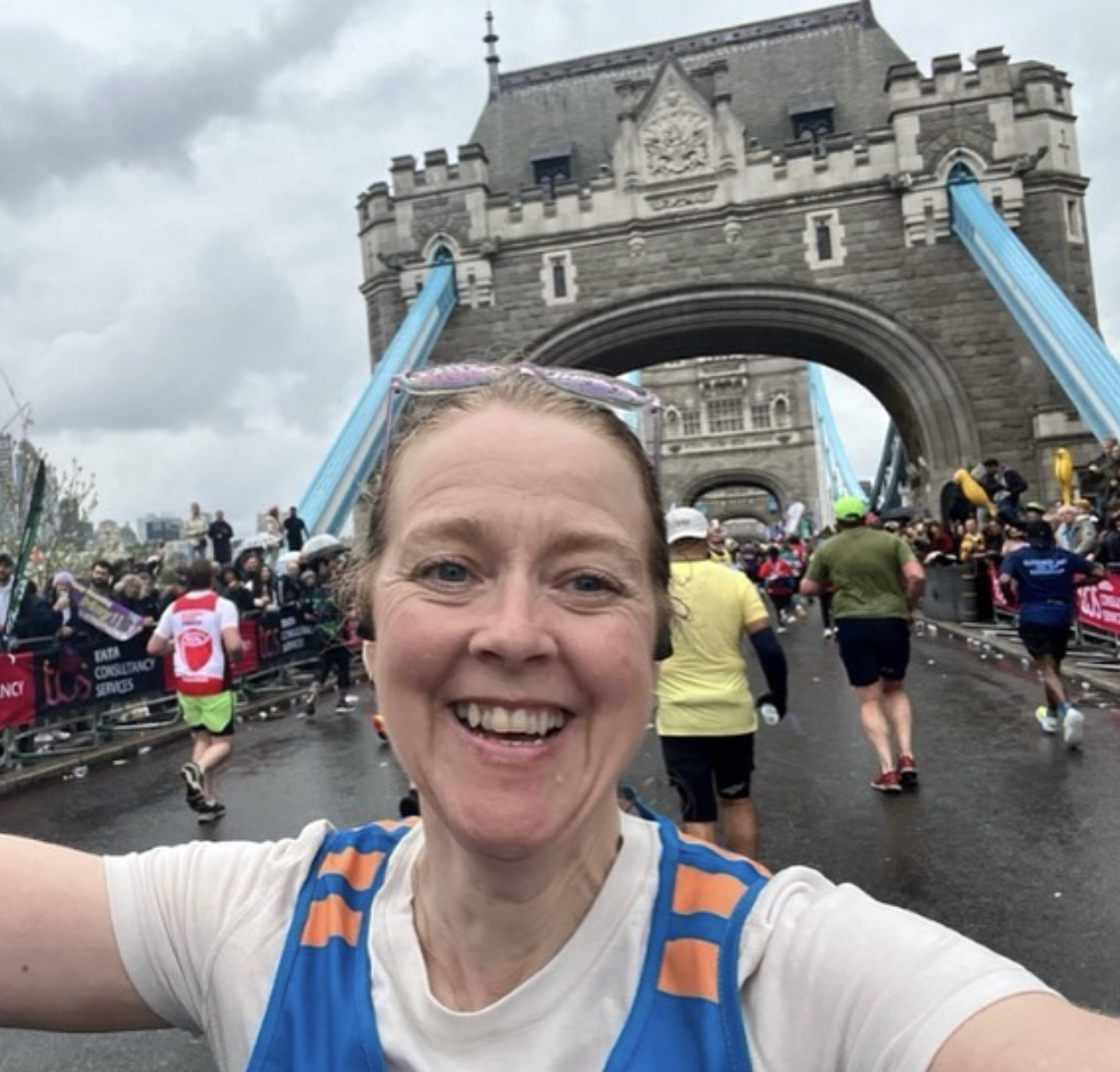
ruth chappell london marathon tower bridge

If you haven’t listened to part one of Ruth’s London Marathon journey yet, you’re going to want to listen/read about that here first!

How it started…

The start of the marathon, Ruth explained, was not as glamorous as you might think. The weather was drizzly, and the vibe was a mix of nerves and excitement. Yet, the support from the crowds, even in the rain, was overwhelming. The encouragement from strangers, calling out her name from the sidelines, created a sense of community.

London landmarks

Part of the marathon experience is being able to take in some of London’s landmarks along the 26.2 mile route. Ruth chatted about the first sight of the Cutty Sark, running over Tower Bridge (the half way point), and how each landmark and the accompanying crowd helped to drive her on. In fact, she said that they really were the most enormous help, particularly as exhaustion set in.

Finish line in sight

There were many challenging moments, like hitting a wall around mile 17, but the crowds, her determination and her will to complete kept her going. She also knew her mum, dad and husband were waiting for her at the finish line. The sight of Buckingham Palace signalled that the marathon is ending, she saw the sign marking the last 385 yards, pushed on, and was met by her family on the finish line.

The tech

I’d downloaded the app (as instructed) so I could track Ruth’s progress, but I was honestly blown away but how clever the app was – it was working across thousands of people and still provided me with her location throughout the route, split times, pace per mile, and even an estimate of when she might finish. It was like having a front-row seat to her marathon adventure!

The technology behind the marathon experience fascinated me even more when Ruth mentioned the chip in her number bib. At specific points along the course, the chip sent information to a strip on the ground, which then transmitted data to the app. So clever and so useful for people on course as well as people following at long at home.

What advice would Ruth give?

I asked Ruth, as a London Marathon completer (if that’s even a word!), what advice she’d give to other people thinking of running a marathon. And despite recording this very soon after the marathon, she said to just do it! To start somewhere, to get a training buddy or join a running club, and work on your mindset as it really will make a significant difference.

As mentioned in part 1, Ruth was running for the Roy Castle Lung Cancer Foundation, supporting the the incredible work they do in raising awareness about lung cancer symptoms and providing support. Find out more about them here.

Completing the London Marathon with Ruth Chappell – Pt 1

Ruth chappell london marathon

For this blog (and the podcast it’s written about!), I’m chatting to my marathon-completing friend, Ruth Chappell. Ruth isn’t just a marathon trier; she’s a marathon-completing superstar! She’s a friend to the podcast, my little guardian angel, and the brains behind Dressage Anywhere. And yes, she just completed the London Marathon!

The medal!

As I recorded this podcast on Zoom, Ruth was wearing her marathon medal- and I would have too. Completing a marathon is huge, but Ruth really is extra special as this marathon has been a goal for a long time and the completion of it meant a lot.

The journey started with Couch to 5k

Ruth hasn’t always been a runner. In fact, she started jogging via the Couch to 5k app a while ago after feeling really inspired by people running around her during the pandemic. Ruth and I did the programme together (but remotely, and she was always ahead), and it wasn’t easy. When I did the last 5k run, I was rather pleased to throw in the towel. But not Ruth. She went to the next level.

Ruth gradually increased her running distances from 5K races to park runs and half marathons. Her determination was awe inspiring. This might seem like plain sailing (if you listen to the podcast, you’ll know it wasn’t!), but it was far from it, and issues with her back meant she had to steady up for quite a while too.

Roy Castle Lung Cancer Foundation

The dream of running the London Marathon became a reality when Ruth decided to apply for a charity place. This wasn’t a walk in the park either! Marathon spaces are in short supply, whether this is through the general ballot or via a charity. Inspired by her mother’s battle with lung cancer, Ruth chose to run for the Roy Castle Lung Cancer Foundation. This organisation holds a special place in her heart, as it provided invaluable support to her mother during challenging times. When the email landed to say that she’d made the cut, there was definitely a mixture if excitement and ‘oh my God, what did I do?!’.

Another bump in the road

Just as the marathon was in sight, Ruth hit COVID-19 shaped bump in the road. Just 31 days before the race, she tested positive, and this led to missing a really important long run. But that didn’t stop her! She recovered and cracked on. It was too important and meant too much not to.

Marathon day arrived

Finally, marathon day arrived. Ruth, adorned with her Roy Castle Lung Cancer Foundation colours (including matching nails!), joined thousands of runners on the London Marathon route. Not only was it a test of strength, it was also a showcase of what people can achieve, how people overcome adversity, kindness and so so much.

Next week, we carry on the marathon story- I hope you loved this episode as much as I did. She really is a superstar and I’m very lucky to call her a friend.

Have you subscribed to the Small & Supercharged Podcast yet? You can get it on Apple through this link! 


Connecting the rural world with podcasting with Ben Eagle

ben Eagle ruralpodmedia

Podcasting continues to grow in popularity, and today I’m joined by someone who has not one, but two podcasts- Ben Eagle from RuralPodmedia. Ben is known for hosting two fantastic podcasts, “Meet the Farmers” and “Rural Business Focus”, and today we’re going to find out all about Ben, his journey, his podcasts and more.

Ben’s farming roots

Ben’s roots are deeply embedded in farming. Having grown up on a dairy farm, Ben’s childhood was intertwined with the cows and farming life, but a challenging period in the 1990s led to significant changes, including selling the cows and transitioning to an arable farm.

What happened next?

Ben’s varied interests and desire to explore different avenues led him to travel, to brewing beer as his first business, working as an assistant at a school in Norfolk, and eventually pursuing a degree in environmental history at Bristol University. But the farming bug never left, and during his university years, Ben spent his summers working on farms, delving into his farming roots. Simultaneously, he volunteered with conservation organisations like the National Trust and Avon Wildlife Trust, gaining practical knowledge and experience. In fact, his first paid job after university was with the Essex Wildlife Trust.

What about farming?

Despite his background, Ben actively avoided farming for a while, encouraged by his dad to explore other possibilities. However, his interest in agriculture persisted, leading him to pursue an agriculture course at the Royal Agricultural University in Cirencester. This marked the beginning of his deeper involvement in farming.

During this time, Ben started the “Meet the Farmers” podcast, initially focused on sharing farming stories with a conservation audience. He realised the importance of listening to farmers and reshaped his own perspective on agriculture.

A pivotal point

During 2017, Ben’s own challenges saw him returning to the family farm, which turned out to be a pivotal moment in his life. He also bought into a friend’s sheep flock, deepening his connection with the farm and gaining a renewed sense of purpose. This led to further business and community based ventures, based at the farm, with community being something that has been important from the podcasting point of view too.

Focus, the birth of his second podcast, and the start of RuralPodMedia

Rural Business Focus came about when Ben realised the power of finding focus, really zeroing in on what he wanted to do in his life. He looked at where he felt he could give the most value, and make the most difference. There was the seed of an idea that was around communications work, podcasting, and with lockdown and the surge in podcasting, people started reaching out to Ben for help. And so RuralPodMedia was born.

To find out more about Ben, follow him on Instagram.

To listen to ‘Meet The Farmers’ – listen on Apple

To listen to ‘Rural Business Focus’- listen on Apple

(The podcasts are also available on other podcasting platforms)

What are your tribe doing to you? How your circle impacts your life

Have you ever thought about how the people you hang out with, people in your tribe, have a profound effect on so many aspects of your life? This could be your personal development, your business, your motivation and even your mental health. Surrounding yourself with the right people is crucial, and I want to delve into that today, drawing from my own experiences. This is the blog version of the podcast below. There’s a LOT more in there- listen here or subscribe on Apple, Spotify, Amazon Music, and anywhere else you listen to podcasts.

Does our tribe influence us?

I’ve encountered this theme many times in my life, and it continues to be a significant aspect of my journey. When facing challenges like a lack of motivation or feelings of pessimism, it’s essential to look at ourselves and what we can do/are doing, but we must also consider the impact of the people around us. The way our tribe feels and behaves directly influences us, and the ripple effect of this can be huge- whether that’s positive or negative.

One popular thought, often attributed to Jim Rohn, suggests that we are the average of the five people we spend the most time with. However, I believe that the influence extends beyond just five individuals. In Seth Godin’s book, called Tribes, he explains how these groups, vital for survival in the past, now represent the supportive people around us who lift us up and support our journeys.

Mastermind is a great example of the positives of a good tribe

Thinking about this, I thoughts about my experiences with Mastermind, my membership group, which is a tribe I’m incredibly proud to be a part of. This community shows, day in day out, the positive impact of a tribe. The supportive community within Mastermind facilitates learning, sharing, and overcoming challenges. Being surrounded by individuals striving for growth significantly impacts on the motivation of others. It’s magical to see. But when you see it and understand the power that the community/communities you’re involved with has, it’s a bit of a game changer.

Another example is connected to a qualification I’m working on.  I’m currently pursuing my ILM Level 7 in senior and executive business coaching and mentoring—a challenging journey (it’s the equivalent of a Masters in nine months) made better by the supportive cohort. Here, everyone brings something to the table, the vibe on our training calls is brilliant, and the Whatsapp group chat carries this on beyond the sessions too.

As we navigate through life, sharing our highs and lows with our immediate circle, we must observe how their responses affect us. If our tribe is supportive and genuinely excited for us, it positively influences our motivation and energy levels. Conversely, a negative or pessimistic tribe can weigh us down, even affecting our pursuit of ambitious goals.

Tribes extend to social media too

Expanding this concept to social media, the content we consume and the people we follow contribute significantly to our mindset. Being mindful of the impact of online connections is crucial. If our feeds are filled with negativity, it can seep into the way we feel and think. And this isn’t OK.

The people we surround ourselves with, both in-person and online, influence our mindset and, consequently, our success and happiness. It’s crucial to assess the impact of our tribe and, when possible, curate a positive and supportive circle that aligns with our goals.

Shameless plug alert! I mentioned Small & Supercharged Mastermind earlier, but it really is an incredible place to learn, develop and grow your business. Find out more here.