When should you work for free? Navigating the Work-for-Free Landscape

Have you ever been asked to work for free? For exposure? For reach? Most people have, and there are some good reasons why working for free can pay, as I discuss in today’s episode. I talk about seven reasons why you might want to consider working for free and seven reasons why you should run for the hills. This is a blog of the podcast- as always, there’s a lot more detail in the podcast (you can listen below or anywhere else you listen to podcasts or below!), but the blog below provides a summary.

Seven reasons to work for free

1. Building Your Portfolio: We all start somewhere, and if you’re embarking on a new journey or career, you might lack experience. Doing some free or low-paid work can help you build a robust portfolio, showcasing your skills and capabilities.

2. Gaining Experience You Lack:  Sometimes, you need evidence of your abilities in a specific area. Working for free allows you to gain valuable experience, whether it’s in photography, public speaking, or any other skill you’re looking to develop.

3. Opening doors you can’t see: Free work can open unexpected doors. You might make valuable connections, get offered courses or training, or receive invitations to events that wouldn’t be on your radar otherwise.

4. Charity support: If it’s for a cause that is close to your heart, offering your services for free can be a way to make a charitable contribution.

5. Payment in Kind: In certain situations, receiving a higher-value item in exchange for your services might be worth considering. If the item/service aligns with your needs or interests, it can be a win-win.

6. Using It as a Stepping Stone: Sometimes, doing free work can serve as a stepping stone, opening doors to future opportunities or enabling you to qualify for something you aspire to do.

7. Passion: If a project or opportunity genuinely excites you and brings you joy, that alone can be a good reason to offer your services for free.

This is not an exhaustive list- at the end of the day it’s your time, and you can use it as you like!

Seven reasons not to work for free

1. Guilt Trips: If someone tries to manipulate you into working for free by playing on your emotions or making you feel guilty, it’s a red flag. Healthy discussions are fine; guilt trips, not so much.

2. Lack of Value: If a project offers no value to you, either in terms of brand promotion, personal development, or genuine interest, it might not be worth your time.

3. Extra Pressure: Taking on free work shouldn’t add excessive pressure to your already busy life. If it starts negatively impacting your well-being or other commitments, it might be time to reconsider.

4. Feeling Exploited: If you sense that someone is taking advantage of your skills and time without offering fair compensation or acknowledgment, it’s a clear sign to reassess the situation.

5. Effort vs. Payback: If the effort you’re putting into a project significantly outweighs the payback, whether in positive feelings or tangible benefits, it might not be a sustainable or wise endeavour.

6. Damaging Your Brand: If a project, whether paid or free, has the potential to harm your personal brand or professional reputation, strongly consider moving away from it (at speed!)

7. Your Gut Says No: Trust your instincts. If your gut feeling is telling you that something isn’t right or doesn’t align with your values and objectives, it’s perfectly acceptable to decline the opportunity.

In the end, the decision to work for free is yours and will be different to anyone else. It will probably depend on various factors such as your goals, values, and the specific circumstances of each opportunity. It’s crucial to know your worth, be open to discussions and, most importantly, be comfortable with the decisions you make regarding your time and energy.

Shameless plug- I wrote a book, called Small & Supercharged: Small Steps to Supercharged Your Brand on a Budget. If you’re in need of a good read to help you grow and scale your business, it’s highly recommended (by others who aren’t me!) See the Amazon reviews here!

Being an influencer with Alanna Clarke- what’s it like being an equestrian influencer?

Alanna Clarke is a 20-year-old dressage rider, law student, and social media superstar with big followings across a range of platforms, brand deals, and some very exciting things to come. On this episode of the podcast (or blog, depending on how you’re consuming this!), we talk about her experiences as an influencer, challenges of this line of work, and lots more besides.

alanna clarke equestrian influencer

Alanna talks about her social media journey, and how she’s actually been involved with social media and growing her accounts since she was just 13. Lockdown prompted her to explore TikTok, where her funny horse-related videos gained traction. But it’s not just TikTok where Alanna’s numbers are impressive- she’s also got an incredible following on Instagram and has a growing subscriber base on YouTube. That said, as Alanna emphasises, it’s about more than the numbers…

How have the platforms and content evolved?

The desires and trends that create engagement have changed since Alanna started, and she talks about  the shift from creating videos in her bedroom to incorporating outdoor scenes with her horses. We talk about the importance of authenticity and staying true to yourself, especially as she navigates brand collaborations.

The Highs and Lows

Our conversation takes a more poignant turn as Alanna reflects on the challenges she’s faced, both online and offline. She talks about losing friendships and enduring online attacks from people she once considered friends. But there have also been a lot of highs, from meeting people at shows to working with brands and events.

Working with brands

Working with brands is a big part of working as an influencer, so we chat about this and Alanna shares a challenging experience with a brand, which really highlighted the importance of clear communication in influencer partnerships. Alanna has learnt a lot from working with brands and shares plenty of tips around how to develop and nurture good relationships that work for everyone.

Influencer marketing evolution

Influencer marketing continues to grow in popularity- whether this is through short or longer term projects. Alanna explains how she prefers longer-term connections with brands and why this is. We also look to the future of equestrian influencer marketing and influencer marketing as a whole, how working with influencers is a rising trend, and how major brands that used to support athletes are now seeing the huge value that influencers can bring to their marketing efforts and seeking relationships in those areas. We both predict a continued shift towards influencers as key players in brand promotion within the equestrian space. We also both agree on the value that influencers can bring to the table. However, this depends on many factors including relatability, authenticity, and ability to connect with their audience. This can set them apart from traditional marketing avenues. The conversation highlights the missed opportunities for top athletes who may not fully embrace influencer marketing.

Payment?

We talk about payment… as this is an interesting topic and one that is a regular discussion in influencer and brand circles. Alanna argues that influencers, especially those for whom influencing is a full-time job, should be compensated for their time, effort, and creativity. We talk about the struggle of determining fair compensation, considering factors like product value and content requirements, especially when equestrian influencer marketing is a fairly new marketing proposition to many businesses.

I loved chatting to Alanna about all things influencer, and if you’d like to follow her and see what she gets up to on her social media platforms, you can do so by following the links below:

Alanna Clarke Instagram

Alanna Clarke TikTok

Alanna Clarke YouTube

Keep on running – the London Marathon with Ruth Chappell Pt 2

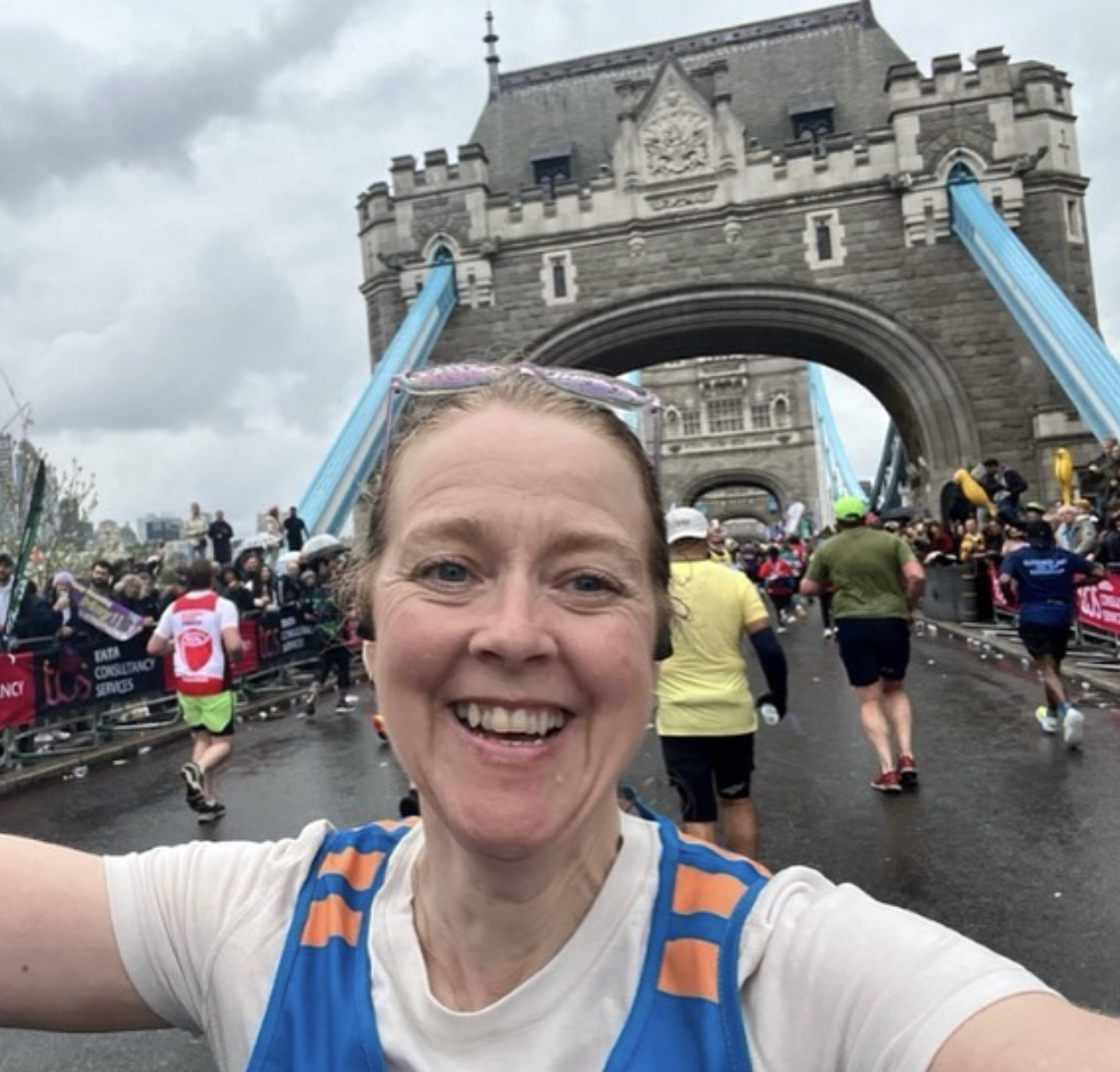
ruth chappell london marathon tower bridge

If you haven’t listened to part one of Ruth’s London Marathon journey yet, you’re going to want to listen/read about that here first!

How it started…

The start of the marathon, Ruth explained, was not as glamorous as you might think. The weather was drizzly, and the vibe was a mix of nerves and excitement. Yet, the support from the crowds, even in the rain, was overwhelming. The encouragement from strangers, calling out her name from the sidelines, created a sense of community.

London landmarks

Part of the marathon experience is being able to take in some of London’s landmarks along the 26.2 mile route. Ruth chatted about the first sight of the Cutty Sark, running over Tower Bridge (the half way point), and how each landmark and the accompanying crowd helped to drive her on. In fact, she said that they really were the most enormous help, particularly as exhaustion set in.

Finish line in sight

There were many challenging moments, like hitting a wall around mile 17, but the crowds, her determination and her will to complete kept her going. She also knew her mum, dad and husband were waiting for her at the finish line. The sight of Buckingham Palace signalled that the marathon is ending, she saw the sign marking the last 385 yards, pushed on, and was met by her family on the finish line.

The tech

I’d downloaded the app (as instructed) so I could track Ruth’s progress, but I was honestly blown away but how clever the app was – it was working across thousands of people and still provided me with her location throughout the route, split times, pace per mile, and even an estimate of when she might finish. It was like having a front-row seat to her marathon adventure!

The technology behind the marathon experience fascinated me even more when Ruth mentioned the chip in her number bib. At specific points along the course, the chip sent information to a strip on the ground, which then transmitted data to the app. So clever and so useful for people on course as well as people following at long at home.

What advice would Ruth give?

I asked Ruth, as a London Marathon completer (if that’s even a word!), what advice she’d give to other people thinking of running a marathon. And despite recording this very soon after the marathon, she said to just do it! To start somewhere, to get a training buddy or join a running club, and work on your mindset as it really will make a significant difference.

As mentioned in part 1, Ruth was running for the Roy Castle Lung Cancer Foundation, supporting the the incredible work they do in raising awareness about lung cancer symptoms and providing support. Find out more about them here.

Completing the London Marathon with Ruth Chappell – Pt 1

Ruth chappell london marathon

For this blog (and the podcast it’s written about!), I’m chatting to my marathon-completing friend, Ruth Chappell. Ruth isn’t just a marathon trier; she’s a marathon-completing superstar! She’s a friend to the podcast, my little guardian angel, and the brains behind Dressage Anywhere. And yes, she just completed the London Marathon!

The medal!

As I recorded this podcast on Zoom, Ruth was wearing her marathon medal- and I would have too. Completing a marathon is huge, but Ruth really is extra special as this marathon has been a goal for a long time and the completion of it meant a lot.

The journey started with Couch to 5k

Ruth hasn’t always been a runner. In fact, she started jogging via the Couch to 5k app a while ago after feeling really inspired by people running around her during the pandemic. Ruth and I did the programme together (but remotely, and she was always ahead), and it wasn’t easy. When I did the last 5k run, I was rather pleased to throw in the towel. But not Ruth. She went to the next level.

Ruth gradually increased her running distances from 5K races to park runs and half marathons. Her determination was awe inspiring. This might seem like plain sailing (if you listen to the podcast, you’ll know it wasn’t!), but it was far from it, and issues with her back meant she had to steady up for quite a while too.

Roy Castle Lung Cancer Foundation

The dream of running the London Marathon became a reality when Ruth decided to apply for a charity place. This wasn’t a walk in the park either! Marathon spaces are in short supply, whether this is through the general ballot or via a charity. Inspired by her mother’s battle with lung cancer, Ruth chose to run for the Roy Castle Lung Cancer Foundation. This organisation holds a special place in her heart, as it provided invaluable support to her mother during challenging times. When the email landed to say that she’d made the cut, there was definitely a mixture if excitement and ‘oh my God, what did I do?!’.

Another bump in the road

Just as the marathon was in sight, Ruth hit COVID-19 shaped bump in the road. Just 31 days before the race, she tested positive, and this led to missing a really important long run. But that didn’t stop her! She recovered and cracked on. It was too important and meant too much not to.

Marathon day arrived

Finally, marathon day arrived. Ruth, adorned with her Roy Castle Lung Cancer Foundation colours (including matching nails!), joined thousands of runners on the London Marathon route. Not only was it a test of strength, it was also a showcase of what people can achieve, how people overcome adversity, kindness and so so much.

Next week, we carry on the marathon story- I hope you loved this episode as much as I did. She really is a superstar and I’m very lucky to call her a friend.

Have you subscribed to the Small & Supercharged Podcast yet? You can get it on Apple through this link! 


Connecting the rural world with podcasting with Ben Eagle

ben Eagle ruralpodmedia

Podcasting continues to grow in popularity, and today I’m joined by someone who has not one, but two podcasts- Ben Eagle from RuralPodmedia. Ben is known for hosting two fantastic podcasts, “Meet the Farmers” and “Rural Business Focus”, and today we’re going to find out all about Ben, his journey, his podcasts and more.

Ben’s farming roots

Ben’s roots are deeply embedded in farming. Having grown up on a dairy farm, Ben’s childhood was intertwined with the cows and farming life, but a challenging period in the 1990s led to significant changes, including selling the cows and transitioning to an arable farm.

What happened next?

Ben’s varied interests and desire to explore different avenues led him to travel, to brewing beer as his first business, working as an assistant at a school in Norfolk, and eventually pursuing a degree in environmental history at Bristol University. But the farming bug never left, and during his university years, Ben spent his summers working on farms, delving into his farming roots. Simultaneously, he volunteered with conservation organisations like the National Trust and Avon Wildlife Trust, gaining practical knowledge and experience. In fact, his first paid job after university was with the Essex Wildlife Trust.

What about farming?

Despite his background, Ben actively avoided farming for a while, encouraged by his dad to explore other possibilities. However, his interest in agriculture persisted, leading him to pursue an agriculture course at the Royal Agricultural University in Cirencester. This marked the beginning of his deeper involvement in farming.

During this time, Ben started the “Meet the Farmers” podcast, initially focused on sharing farming stories with a conservation audience. He realised the importance of listening to farmers and reshaped his own perspective on agriculture.

A pivotal point

During 2017, Ben’s own challenges saw him returning to the family farm, which turned out to be a pivotal moment in his life. He also bought into a friend’s sheep flock, deepening his connection with the farm and gaining a renewed sense of purpose. This led to further business and community based ventures, based at the farm, with community being something that has been important from the podcasting point of view too.

Focus, the birth of his second podcast, and the start of RuralPodMedia

Rural Business Focus came about when Ben realised the power of finding focus, really zeroing in on what he wanted to do in his life. He looked at where he felt he could give the most value, and make the most difference. There was the seed of an idea that was around communications work, podcasting, and with lockdown and the surge in podcasting, people started reaching out to Ben for help. And so RuralPodMedia was born.

To find out more about Ben, follow him on Instagram.

To listen to ‘Meet The Farmers’ – listen on Apple

To listen to ‘Rural Business Focus’- listen on Apple

(The podcasts are also available on other podcasting platforms)